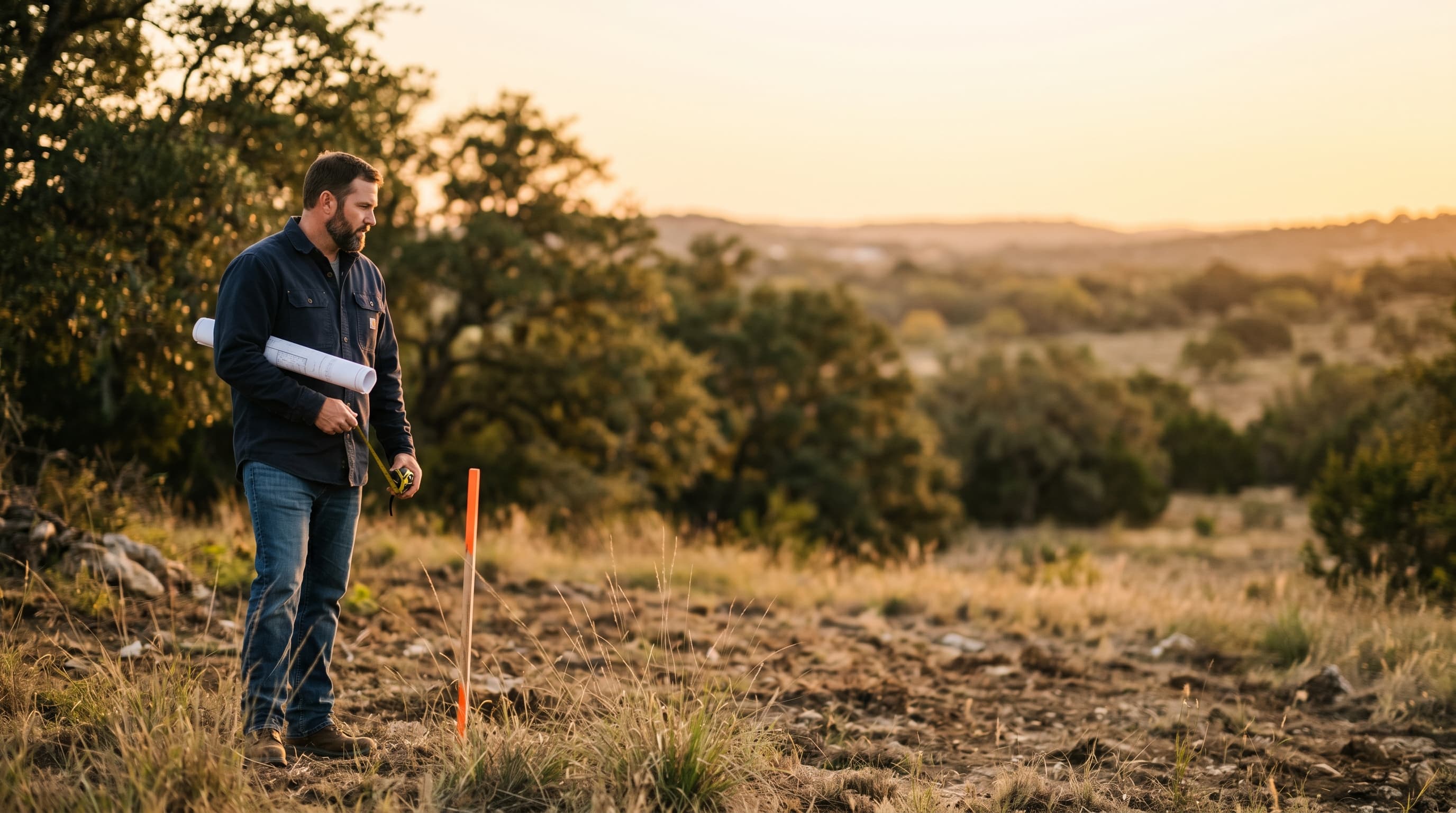
You found ten acres outside of Seguin with a view of the hills, and you are ready to start building. Most people spend their first few months obsessing over the floor plan, but when you build on your lot in Guadalupe County, the dirt determines whether your home lasts 20 years or 100.
Building on your own land offers freedom, but it also shifts all the risk from the developer to the homeowner. In a subdivision, the builder has already graded the land and installed the utilities. On your own acreage, you are responsible for everything from the soil stability to the waste management. If you miss one detail during the site prep phase, you will spend the next decade fighting cracks in your drywall or standing water in your yard.
The Reality of Guadalupe County Soil
The ground beneath us varies wildly across Guadalupe County. Depending on where your lot sits—whether it is closer to the river bottoms near Seguin or higher up toward the Hill Country—you are dealing with different soil compositions. We see a lot of expansive clay in this region. This type of soil acts like a sponge; it swells when wet and shrinks when dry.
If a builder pours a standard slab without accounting for these shifts, the foundation will eventually heave. I have seen too many homes in this area with diagonal cracks running through the bedroom corners because the builder didn't spend enough time on the engineering.
For a premium build, we don’t guess. We look at soil reports and engineer the foundation to resist those specific movements. This might mean deeper piers or a reinforced slab design. It costs more upfront, but it is the only way to ensure your floors stay level as the seasons change.
Water and Waste: The Well and Septic Challenge
When you build on your lot in Guadalupe County, you are often stepping away from city infrastructure. This means you are responsible for your own water source and sewage disposal. These aren't just checkboxes on a permit application; they are critical systems that dictate where your house actually sits on the property.
First, there is the septic system. You cannot simply dig a hole and hope for the best. The soil must be able to absorb the effluent. We look at the "perc" (percolation) of the soil to determine if you need a traditional system or an aerobic treatment unit. If you place your house in the most scenic spot on the lot but that spot has poor drainage, you will have a failing septic system before you even move in.
Then there is the water. Drilling a well is always a gamble until the bit hits water. I always advise clients to get their water tests done early. You need to know the flow rate and the quality of the water. If the water is heavy in minerals or sulfur, we build filtration systems directly into the plumbing plan rather than trying to tack them on as an afterthought.
Managing Humidity and Airflow in the Hill Country
The Texas Hill Country has a specific kind of humidity that can eat a house from the inside out if you aren't careful. Many builders use "cookie-cutter" plans designed for other regions, but those homes often fail here because they don't account for our specific climate.
Proper ventilation is where most builders cut corners. To protect the structure, we focus on the building envelope. This means using high-quality vapor barriers and ensuring the attic is vented correctly to prevent moisture buildup. When humidity gets trapped in your walls or ceiling, it leads to mold and degraded lumber.
I also pay close attention to the orientation of the home. In Guadalupe County, the afternoon sun can be brutal. By positioning the house to take advantage of natural breezes and shading the southern and western exposures, we reduce the load on your HVAC system. A well-positioned house stays cooler naturally, which means your equipment doesn't have to run 24 hours a day during August.
Handling Permits and Local Regulations
Building outside city limits doesn't mean there are no rules; it just means the rules are different. Whether you are dealing with Guadalupe County officials or the specific ordinances in New Braunfels or Seguin, the paperwork can be a headache if you don't know who to call.
The biggest hurdle is often the driveway permit and the environmental impact study. If your lot has protected wetlands or certain types of limestone outcroppings, you cannot just bulldoze through them. You need a plan that respects the land while providing safe access for emergency vehicles.
I handle these conversations because I know the local inspectors and the county requirements. We ensure that every permit is pulled correctly before a single nail is driven. It prevents the "stop work" orders that can delay a project by months and cost thousands in unplanned interest payments on construction loans.
What to do next
If you own land or are looking at a lot, take these steps before you sign a contract with any builder:
- * Order a professional soil test to understand what is happening beneath the surface.
- * Verify the water table and get a quote for well drilling based on your specific location.
- * Check the setback requirements for your specific zoning to see exactly where the "buildable envelope" of your lot sits.
- * Map out your septic field to ensure it doesn't conflict with your desired home placement or existing old-growth trees.
Building a custom home is an investment in your family's future. When you build on your own land, the quality of the home is only as good as the preparation of the site. If you have a lot in Guadalupe County and want to discuss how to actually prepare it for a high-end build, I am happy to talk through the details with you. Give us a call or send a message, and we can look at your land together.


