A lot of people buy a piece of land in Guadalupe County and assume any set of blueprints will work. In our part of Texas, that assumption can cost you your foundation or your peace of mind within five years.
When you start searching for builder homes, you will find two distinct paths: the production model and the custom build. One follows a corporate manual to maximize profit per square foot. The other follows the land and the climate to ensure the house is still standing straight thirty years from now. I have spent over 20 years building in Seguin and the Hill Country. I have seen where the shortcuts are taken, and I know how to fix them before the first nail is driven.
The Reality of Guadalupe County Soil
The biggest mistake a builder can make in this region is ignoring the soil. Much of the land around Seguin and New Braunfels sits on expansive clay. This soil acts like a sponge: it swells when it rains and shrinks during our brutal August droughts. If your foundation is not engineered specifically for the site, you will see cracks in your drywall and doors that suddenly won't close.
Many generic builder homes use a standard slab design across an entire subdivision to save on engineering costs. That does not work here. A proper custom build requires a site-specific approach. We look at the soil composition and the slope of the land to determine if we need a post-tension slab or specific piers. The goal is to create a base that moves with the earth rather than fighting against it. If a builder cannot explain their foundation strategy for your specific lot, they are guessing with your money.
Managing Hill Country Humidity and Heat
The Texas Hill Country has a specific kind of humidity that can trap moisture inside a wall cavity if the home is not breathed correctly. When moisture stays trapped, you get mold and rot. This is why we focus heavily on the building envelope.
Proper ventilation starts at the attic and ends with the flashing around your windows. We use high-grade house wraps and precise flashing techniques to ensure water sheds away from the structure. I also prioritize roof overhangs. Deep eaves do more than look traditional: they keep the Texas sun off your walls and protect your siding from heavy rain. It is a simple architectural detail that significantly lowers your cooling costs and extends the life of your exterior paint.
The Complexity of Wells and Septic Systems
If you are building outside city limits, you are dealing with raw land. This means you are responsible for your own water and waste. I have seen too many homeowners buy a lot only to find out the soil will not "perc" (percolate), meaning a standard septic system cannot be installed.
Before we break ground, we verify the viability of the lot. We ensure the septic field is placed correctly to avoid contamination and that the well is drilled into a productive aquifer. These are not just permits to check off a list: they are the lifeblood of your home. A poorly placed septic system can lead to failures that cost tens of thousands of dollars to remediate. We handle the permitting and the technical specs so you do not have to guess if your water will run clear or your drains will hold.
The Difference Between Premium Materials and "Upgrades"
In the world of production builder homes, you are often asked to pay for "upgrades." These are usually aesthetic choices: a different color of carpet or a fancy light fixture. True premium building is about the things you cannot see once the drywall is up.
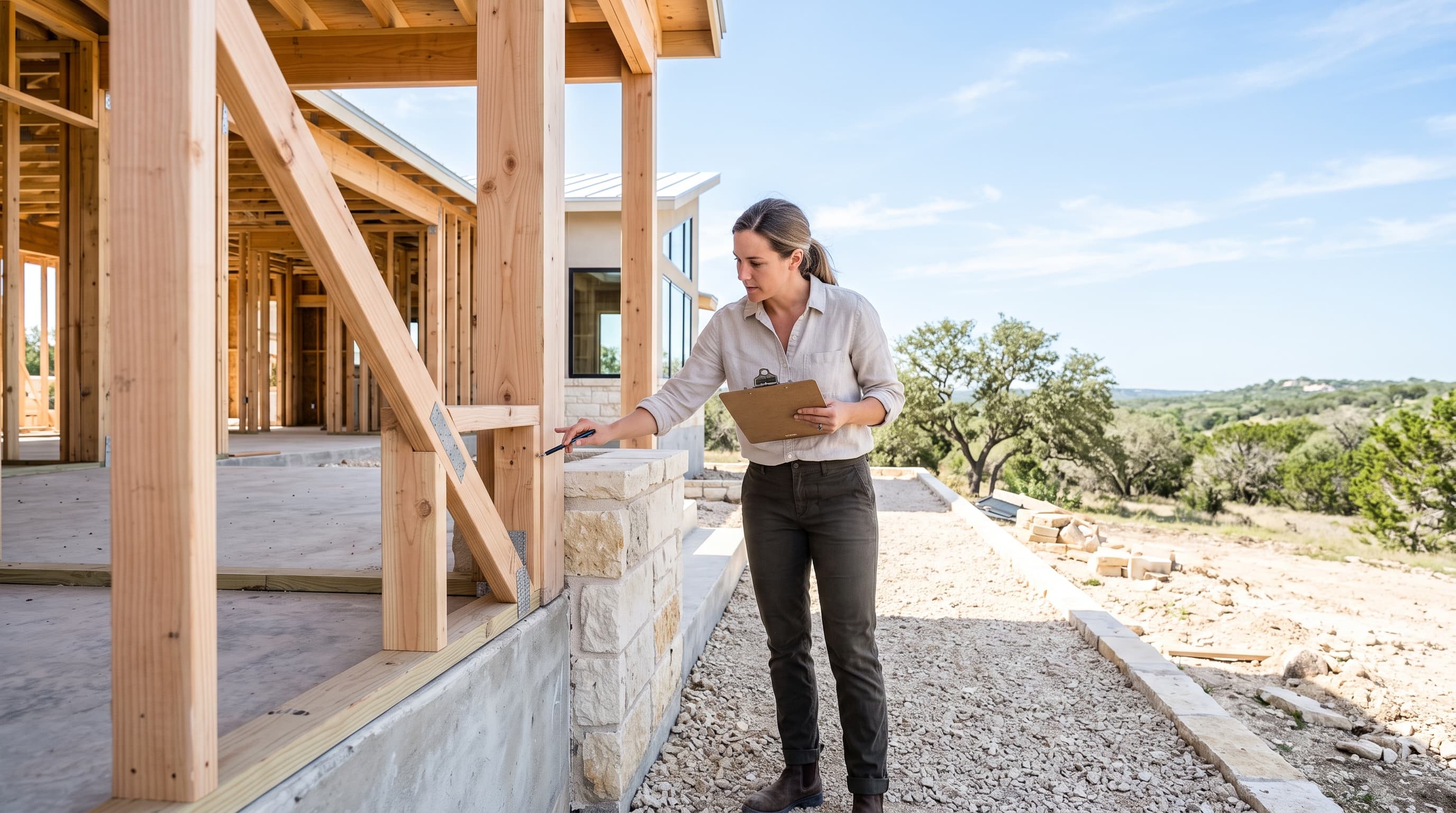
I focus on the bones of the house. This means using higher-grade lumber that is straight and seasoned, ensuring the framing is square, and using fasteners that will not rust in our humidity. We look at the R-value of the insulation and the U-factor of the windows to ensure the home stays cool without the AC running 24 hours a day. A house can have marble countertops, but if the framing is sloppy or the insulation is thin, it is not a premium home. It is just a cheap house with expensive jewelry.
What to do next
If you are planning a build in Seguin or the Hill Country, start with these steps:
- * Get a professional soil test for your specific lot before choosing a floor plan.
- * Verify the percolation rate of your land if you are installing a septic system.
- * Ask your builder specifically how they handle moisture barriers and attic ventilation for the Texas climate.
- * Review the structural specifications of your foundation, not just the aesthetic finishes.
Building a home is likely the largest investment you will ever make. It should be done with a level of precision that matches that investment. If you want to discuss how to properly site your home or need a builder who understands the specific challenges of Guadalupe County land, I am happy to talk. Reach out to TKG Custom Homes and we can look at your plans together.